Water quality problems rarely announce themselves all at once — they tend to show up in small, everyday details that are easy to write off individually. A water test replaces that guesswork with a clear picture of what's actually in your water.
Signs to watch for
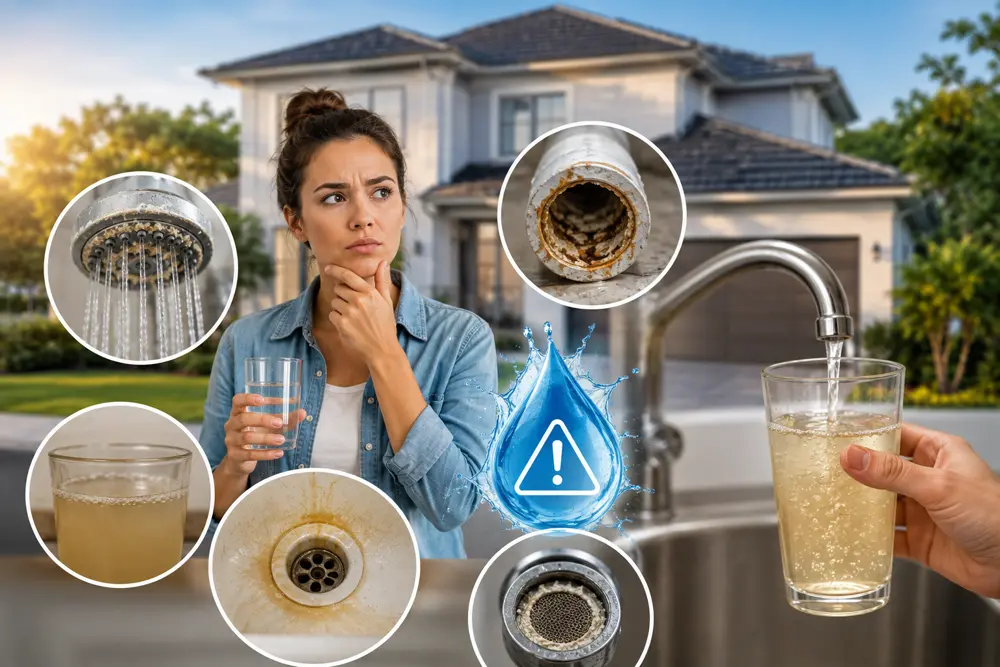
- Taste or odor changes — a chlorine taste, a metallic edge, or a rotten-egg smell (often sulfur) coming from the tap
- Staining — reddish-brown stains on sinks, tubs or laundry, which can point to iron in the water
- Scale buildup — white, chalky residue around faucets and showerheads, a common sign of hard water
- Cloudy or discolored water — water that looks hazy or slightly tinted straight from the tap
- Dry skin or dull hair after showering — often linked to mineral content in the water
- Appliances wearing out faster than expected — water heaters, dishwashers and washing machines working harder due to scale
Why a professional test matters
Every one of these signs can have more than one cause, and the right fix depends on knowing exactly what's present — hardness minerals, chlorine, iron, sulfur or sediment each call for a different approach. A test takes the guesswork out of the equation, so any recommendation is based on your home's actual water, not a general assumption.
What to expect
A free in-home water test is quick, non-invasive, and comes with a plain-language explanation of the results — no pressure, and no obligation to move forward with any particular system.