Florida's water supply — whether it comes from a municipal system or a private well — often travels through limestone-rich ground before reaching your home. As it does, it naturally picks up dissolved minerals, mainly calcium and magnesium. Water carrying a high concentration of these minerals is what's known as "hard water," and it's extremely common across Central Florida, including areas like Longwood, Orlando and the surrounding communities.
How to recognize hard water in your home
Hard water isn't usually visible in a glass, but it shows up in the everyday details of running a household:
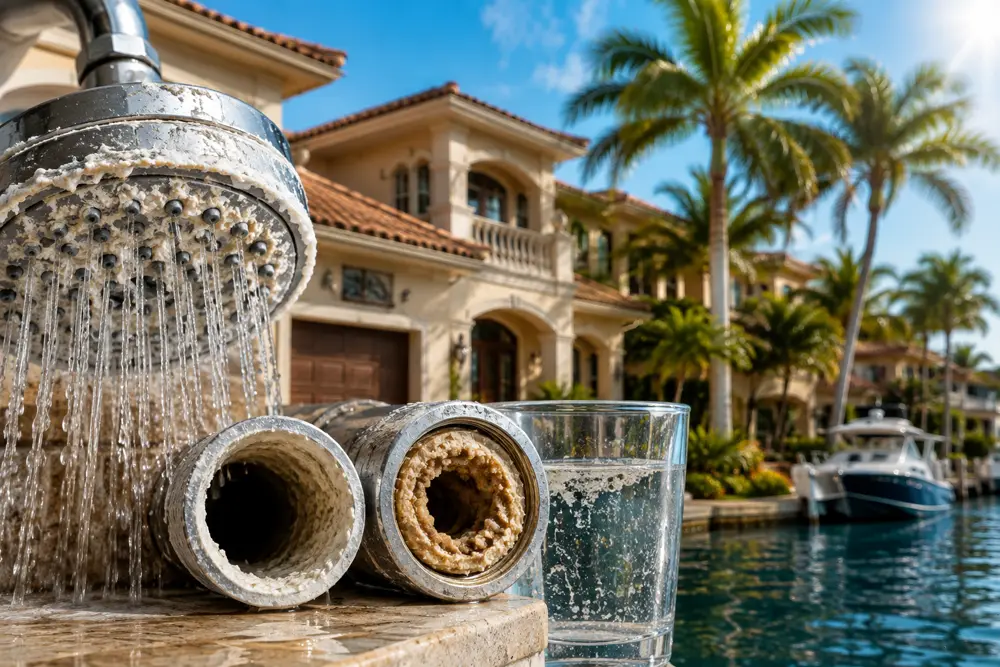
- White, chalky mineral buildup (scale) around faucets, showerheads and drains
- Soap and shampoo that don't lather as easily, and skin or hair that feels dry after washing
- Spots or film on dishes and glassware after they come out of the dishwasher
- Laundry that feels stiff, or fabrics that fade and wear out faster than expected
- Water heaters and appliances that seem to lose efficiency over time
Why it matters beyond the inconvenience
Mineral scale doesn't just affect how things look — it can gradually build up inside pipes, water heaters and appliances, making them work harder than they need to. Over years, that added strain can shorten the lifespan of equipment that's expensive to replace.
What you can do about it
The most reliable way to know whether hard water is affecting your home is a water test — it measures mineral concentration directly rather than relying on guesswork. From there, a whole-home water softener is the most common solution, treating water at the point it enters your house so every tap, shower and appliance benefits.
Every home's water is a little different, which is why we recommend starting with a free in-home water test before choosing a system — it gives you a clear, specific answer instead of a generic recommendation.